Ultrasonic Spot Welder for Plastic Manure Belt
Our Ultrasonic Spot Welder For Manure Belt is ideal for improving farms manure management systems. Achieve seamless joins with precision and speed.

A hand gun that joins manure belt on the spot
The unit is built for plastic manure belt work on the farm. It uses ultrasonic technology to join and repair the conveyor belts that carry manure away in poultry and livestock operations: high-frequency vibration at the tip of the gun melts the two layers where they meet, and they set into a solid-state weld.
Because the joint is made by vibration rather than by heat from outside, there is no adhesive to mix and no secondary fastener to fit. The weld is made wherever the gun is pressed, so a belt end can be spliced, or a damaged run repaired, on the belt itself in the barn, without taking it off the line.
A weld that survives the barn
Solid-state welds, no consumables
The machine uses ultrasonic waves to make a strong, reliable weld on the belts that handle and process manure, so belt ends are joined without adhesive, staples or any other secondary fastening material.
Made for hygiene and long life
The joint suits farms that demand high hygiene standards and long belt life, because manure is corrosive: the splice stays smooth across the belt, so the run cleans down instead of snagging on a raised fastening.
Quick enough for the daily round
Welding is fast and straightforward to carry out, so a repair costs the farm very little downtime and drops into the normal working day of a poultry house or a livestock facility.
The weld is made where you press the tip

One hand, one weld, wherever the belt is
The gun is the part that meets the work. The horn at the front is pressed onto the belt and the vibration does the joining, so the operator only has to hold the gun steady for the length of the weld.
Because the tool is hand-held, the belt does not have to be taken to a machine. The operator reaches the splice position on a manure belt, an egg conveyor or a barn belt and welds it exactly where the joint is needed.
The box that drives the gun

Cabinet-sized, and set beside the belt
The generator is a compact cabinet measuring 32 cm × 21 cm × 9 cm. It turns the mains supply into the high-frequency drive the gun needs, and it is linked to the gun by a cable, so the box can sit on the floor or on a bench while the weld is made on the belt.
The box is rated 800 W and runs on 220 V 50/60 Hz. Frequency and welding time are set from the generator, which is what makes the same power unit usable across the different belts on a farm.
Set the delay, press TEST, make the weld

Delay-time display, TEST and EDIT keys, tuning knob
The front of the generator carries the delay-time display, the TEST and EDIT keys and the tuning knob. The delay time is what sets how long the gun is driven, and so how much energy goes into the weld on the belt.
TEST runs the setting without the belt in place and EDIT changes it. Because the power supply adapts to the voltage it is given, the setting that works on one farm behaves the same way on the next.
Five things that keep the weld repeatable
The weld position is followed as the work goes on, with real-time feedback control keeping the joint consistent along the belt.
Timing is held to a tenth of a second, so one weld is made like the next instead of depending on how the trigger is held.
The supply adapts to the voltage it is given, which is what a farm installation needs when the same machine moves between buildings.
Heat is controlled in three stages with fine adjustment, so the setting can be trimmed to the belt rather than only switched between high and low.
Welding is quick, which keeps production efficient and puts the belt back into service sooner after a repair.
Tips from 3 to 15 mm, or made to your joint

The tip is the part that is changed for the job
The welding tip is supplied in sizes from 3 mm to 15 mm, and a tip of another dimension can be made where the joint calls for it. The tip is the working end of the head: it is what touches the belt and passes the vibration into the plastic.
The head is built from the transducer and its horn, held in the two halves of the gun shell, so a worn tip or a different one can be fitted without changing the gun itself.
Ultrasonic spot welder for manure belt specification
Machine data
| Specification | Data |
|---|---|
| Model | 2000BL |
| Product name | Ultrasonic spot welder for manure belt |
| Power supply | 220 V 50/60 Hz |
| Ultrasonic generator size | 32 cm × 21 cm × 9 cm |
| Frequency | 35 kHz |
| Rated power | 800 W |
| Welding time | 0 – 10 s (continuously adjustable) |
| Welding tips dimension | 3 to 15 mm, or customized dimension available |
| Warranty | One year |
Where the machine is used
| Industry | Agriculture — poultry and livestock operations |
| Belts | Plastic manure belts in manure management systems |
| Also used on | Egg conveyor belts and barn belts |
| Job | Joining new belt ends and repairing conveyor belts in service |
| Joining method | Ultrasonic solid-state weld, no adhesive or secondary fastening |
| Process test | Send us a belt sample and we will weld it for you |
| Quotation | sales@intopindustrial.com |
Poultry houses, egg conveyors and barn belts
Poultry manure belts
The belt that carries manure out of a poultry house, spliced and repaired in place so the house does not have to be cleared to change it.
Egg conveyor belts
Belts that move eggs through the house, where a smooth splice keeps the run clean and the product undamaged.
Livestock barn belts
Manure handling belts in livestock operations, where the joint has to hold up in a corrosive, wet environment.
Belt splicing and repair
New belt ends joined on site, and damaged runs repaired without taking the belt off the line.
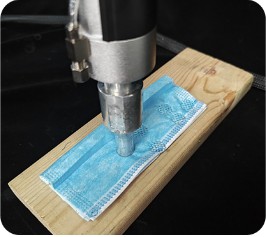
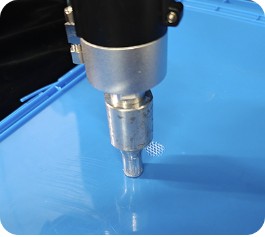
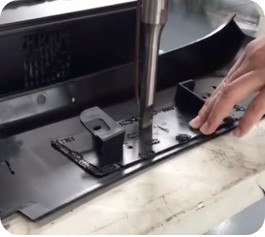
Fabric, plastic and puncture welding
The same gun and generator cover the three jobs the tip is asked to do on a farm: joining woven belt material, welding plastic sheeting, and staking or puncturing a formed part.
Other ultrasonic welding equipment


More views


Questions buyers ask before ordering
Which belt materials can it weld?
It welds PVC and PE manure belts and similar thermoplastic belting used in poultry houses.
Can it repair belts in place?
Yes — the handheld welder lets you repair belts on the line without removing long sections.
How strong is the joint?
The ultrasonic joint is as strong as the belt in tension and holds under farm conditions.
What about the farm's unstable power?
The generator tolerates supply swings; for very unstable grids we can advise a stabiliser.
Send us the belt and we will set the machine for it
Tell us the belt material, its thickness and the joint you need, and we will come back with the tip size, the welding time and a quotation.
Request a Quotation